Tech Insights
WordPress vs Custom Website
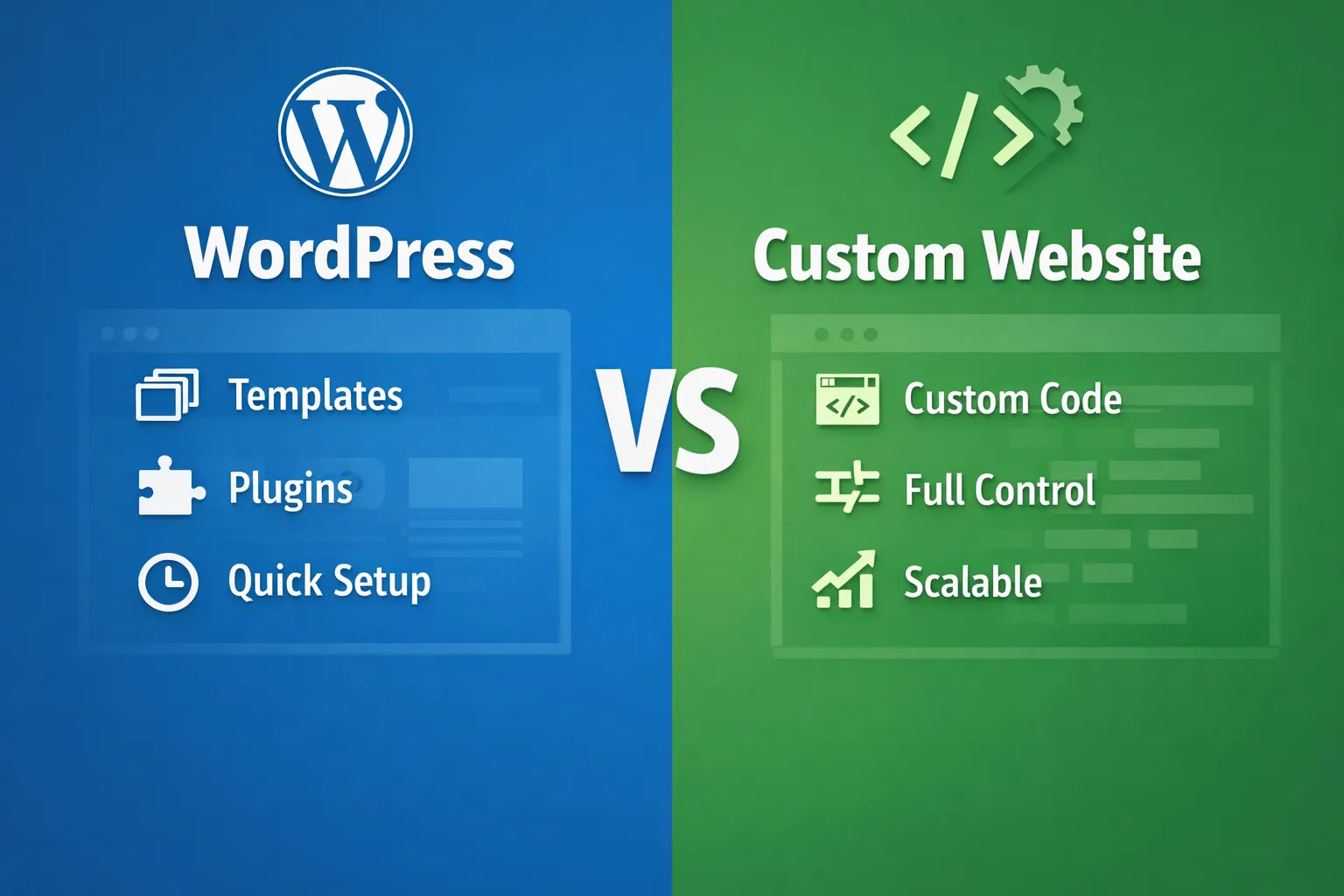
When building a website for your business, one key question appears:
👉 Should I use WordPress?
👉 Or invest in a custom-built website?
Let’s break it down in simple terms.
What is WordPress?
WordPress is a ready-made website platform that uses themes and plugins to create websites quickly.
It’s popular, affordable, and widely used.
Pros of WordPress
• Lower initial cost
• Faster launch
• Easy to edit content yourself
• Large library of plugins
• Good for small business websites
Cons of WordPress
• Heavy plugin usage can slow the website
• Security depends on constant updates
• Plugin conflicts may break features
• Custom features often require paid plugins
• Deep integrations can be complicated
WordPress works well for:
- Simple company websites
- Blogs
- Small online stores
- Portfolio sites
What is a Custom Website?
A custom website is built specifically for your business from the ground up. Developers use professional frameworks like Laravel to create exactly what your business needs.
Think of it like building a tailored suit instead of buying one off the rack.
The Big Difference: Integrations & Customization
This is where custom development becomes very powerful.
With WordPress:
If you need:
- CRM integration
- Custom booking logic
- ERP system connection
- API integrations
- Advanced dashboards
- Unique workflows
You usually:
- Search for a plugin
- Hope it works
- Adjust your business process to match the plugin
- Deal with limitations
Sometimes plugins conflict with each other. Sometimes they don’t support exactly what you need. You are adjusting your business to the system.
With Custom Development:
You build the system around your business.
✔ Direct API integrations
✔ Clean database structure
✔ Fully controlled business logic
✔ No plugin conflicts
✔ Easier to scale later
✔ Custom admin panels
✔ Better long-term flexibility
Integrations and customizations are much easier and cleaner because the system is designed specifically for your processes from the beginning.
Instead of forcing features into a template, everything is built intentionally.
Pros of Custom Website
• Fully tailored to your needs
• Easier integrations with external systems
• Easier to customize and expand
• Better performance
• Higher security control
• Scalable for future growth
• Unique design and user experience
Cons of Custom Website
• Higher initial investment
• Longer development time
• Requires professional developers
Which One Should You Choose?
If you need:
✔ Simple website
✔ Basic online presence
✔ Limited budget
✔ Standard features
→ WordPress is usually enough.
If you need:
✔ Deep integrations
✔ Custom workflows
✔ Business automation
✔ Scalable system
✔ Long-term growth
→ Custom development is the smarter long-term solution.
Conslusion
A website is not just design — it is a business infrastructure.
If your website will play a central role in your operations, handle clients, payments, bookings, data, or automation, custom development gives you much more flexibility and control in the long run.